cVRP Merchant Verification: Onboarding After UKPI Expansion
When UKPI widened commercial variable recurring payment (cVRP) merchant categories on 9 November 2026, the regulated parties in the chain did not change — but cVRP merchant verification became a harder operations problem. Payment initiation providers still hold customer consent and initiate each pull, yet many newly eligible businesses — third-party rail ticket retailers, fundraising platforms, letting agents, and personal loan intermediaries — are not payment-regulated firms. Your team needs a repeatable way to confirm each merchant is who they claim to be, still trading, and still within UKPI scope before you route live consents through them.
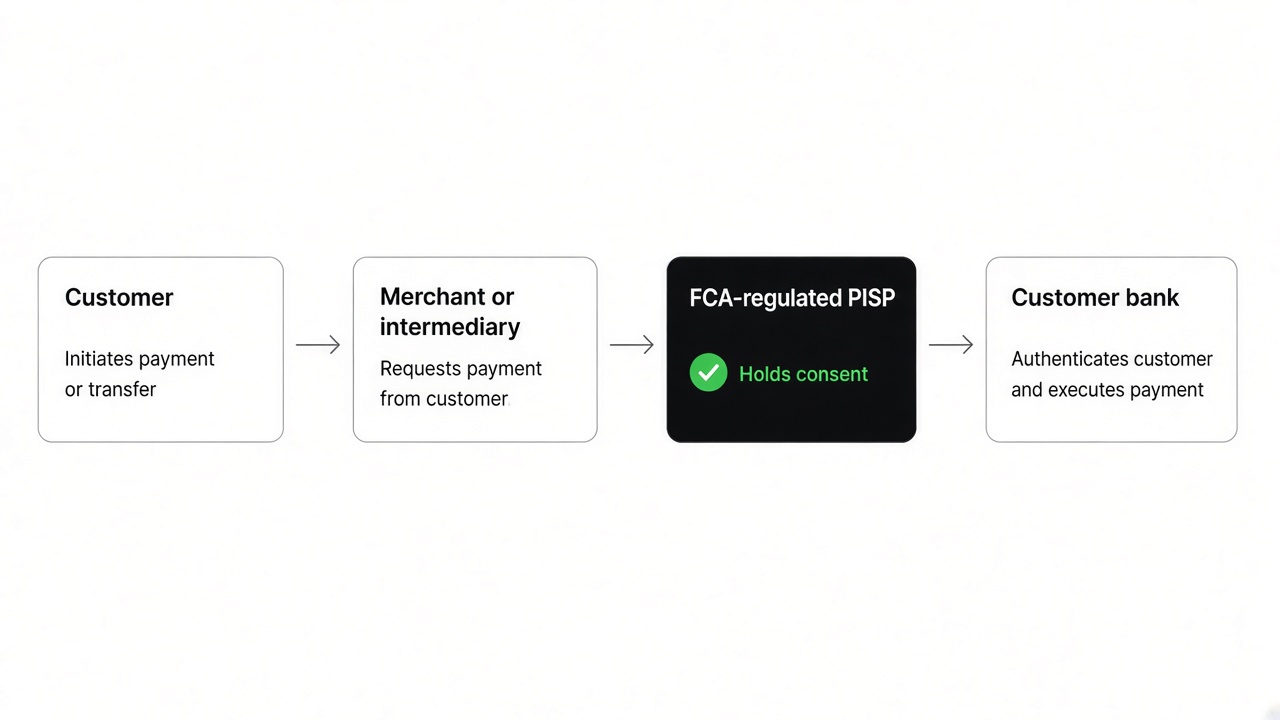
cVRP merchant verification: The due diligence and ongoing checks a payment initiation provider (or the merchant’s integration partner) uses to confirm that each business collecting via UK commercial variable recurring payments is legitimate, within UKPI’s eligible categories, and still in good standing for as long as customer consent remains active — especially when unregulated intermediaries sit between the payer and the service provider.
For scheme mechanics see cVRP. For unit costs see commercial VRP economics. Seller payout verification during PSP signup is a different workflow — see open banking merchant onboarding.
What changed for merchants when UKPI expanded cVRP categories?
On 9 November 2026 UKPI added personal loan providers, accredited third-party rail ticket retailers, fuller housing payments via qualifying providers and agents, and donations through fundraising platforms to the merchants PISPs may serve with cVRP — while the FCA-regulated PISP still collects and stores consent.
Industry commentary published by Invela on 10 November 2026 describes the expansion in response to market feedback and UKPI’s aim for major merchants to offer cVRP in 2027. The UK Payments Initiative runs the commercial scheme on top of open banking initiation rails; Open Banking Limited’s VRP overview still defines how mandate caps and customer control work in the banking app.
The regulated roles did not shift: the customer approves limits once, the PISP holds consent and requests each payment, and the customer’s bank enforces caps before sending funds on Faster Payments. What shifted is the merchant mix — more intermediaries that are not authorised payment institutions themselves, which pushes verification upstream of the first live pull.
Why does merchant verification matter more for cVRP than one-off pay by bank?
Consent can live for months or years, so a merchant that looked fine at onboarding can change trading status, branding, or ownership while pulls continue — unlike a single checkout session where risk is concentrated in one initiation.
The FCA and PSR prioritisation paper on UKPI commercial VRP frames Phase 1 around regulated sectors and scheme governance; as categories widen, scheme rules still depend on PISPs knowing which legal entity receives funds and whether that entity remains eligible. Open Banking Expo coverage from 11 November 2026 emphasises consumer trust and clear liability when transactions fail — both tie back to correct merchant identification.
Teams often confuse this with payer-side checks. Open banking account verification confirms the customer’s name and account before you pay out or lend. cVRP merchant verification confirms the collector — the business name on the mandate, Companies House identity, sector eligibility, and whether an intermediary is accredited for its role (for example a ticket retailer or fundraising platform).
How is merchant verification different from seller onboarding verification?
Seller onboarding verification proves payout IBANs for sub-merchants on a platform; cVRP merchant verification proves the entity authorised to initiate variable pulls on behalf of a specific service relationship — often including intermediaries the customer never brands separately on their bank statement.
| Dimension | Seller onboarding (payout) | cVRP merchant verification |
|---|---|---|
| Primary risk | Wrong disbursement account | Wrong collector or ineligible category |
| Typical user | Marketplace seller | End customer paying a bill or donation |
| Consent owner | Platform + seller KYC | FCA-regulated PISP |
| Time horizon | Onboarding event | Entire consent lifetime |
| Data rail | Often AIS name–account match | KYC registry + scheme category rules + monitoring |
If you operate both models — payouts to sellers and cVRP collections from buyers — keep the control libraries separate. Mixing the two audits creates false confidence: a verified payout account does not prove the seller may collect variable amounts under UKPI rules.
What should PISPs and merchants verify before the first cVRP pull?
Confirm legal entity, UKPI category fit, settlement account ownership, and who owns customer communications before you register the merchant in your cVRP stack — then document refresh cadence for consents that renew automatically.
A practical minimum checklist:
- Legal entity and trading names — Companies House (or equivalent) record matches the brand shown in the banking app consent journey; trading-as names map to a single settlement account.
- Category eligibility — Merchant activity maps to a UKPI Wave 1 sector (utilities, insurers, charities, regulated finance, and the November 2026 additions such as qualifying housing agents or accredited ticket retailers). When in doubt, treat as out of scope until UKPI guidance or your sponsor bank confirms.
- Intermediary role — If a platform sits between customer and service provider, capture contracts showing who holds customer complaints, refund policy, and transaction descriptors sent to the ASPSP.
- Settlement account verification — AIS or registry-backed confirmation that collections account belongs to the same legal entity (reuse patterns from income verification open banking only where payer income is relevant — not as a substitute for merchant KYC).
- Consent UX ownership — PISP remains regulated for consent copy and limit screens; merchants must not store or replay consent tokens outside PISP systems (VRP consent renewal covers lifecycle ops).
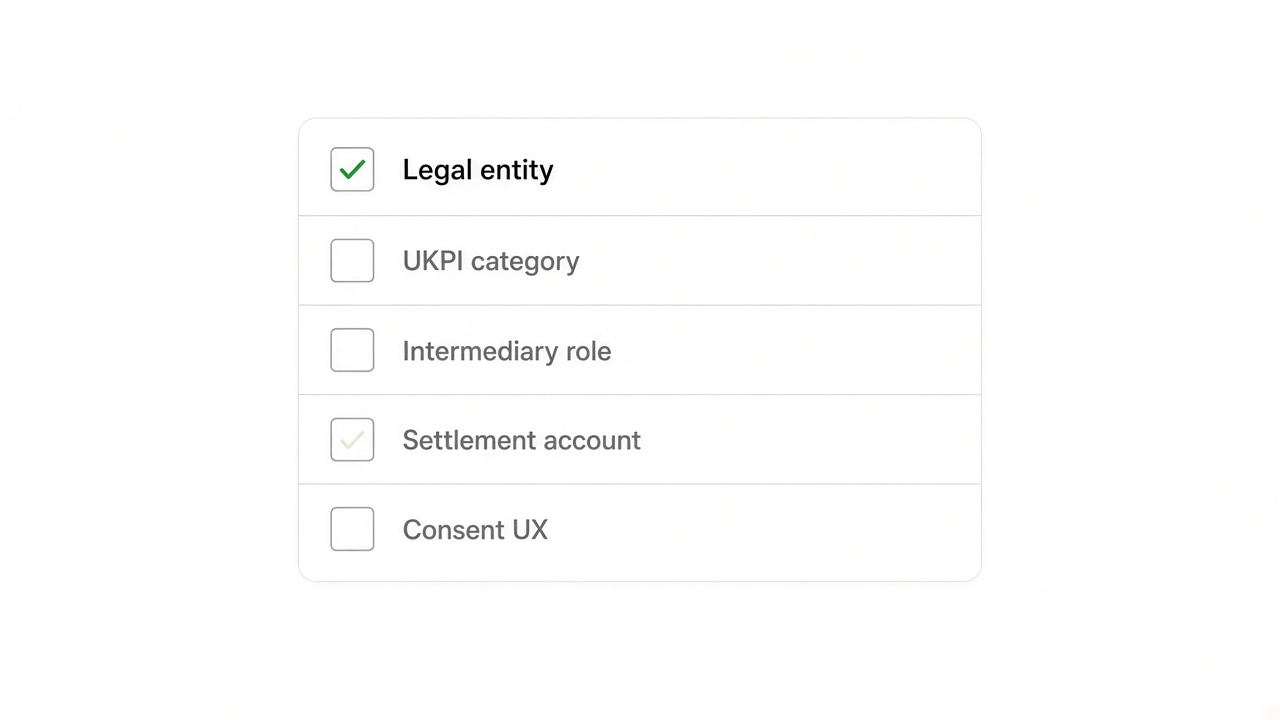
Document who signs off — risk, compliance, and collections ops — before production API keys activate. For vendor assessment templates, cross-read open banking vendor due diligence and apply cVRP-specific appendices (category, intermediary, consent lifetime).
How do you keep merchant standing current after go-live?
Schedule reverification on material events — ownership change, FCA registration shift, sector reclassification, or customer complaint spikes — and align refresh with consent renewal windows where possible.
Unlike card-acquirer MID reviews tied to chargeback ratios, cVRP merchant verification is still maturing. Scheme participants cited at Open Banking Expo noted that consumers stay on familiar rails unless trust and dispute handling are clear — which means your ops team needs named owners for:
- Periodic registry checks (annual or on alert) for dissolved or dormant companies
- Category drift — a charity fundraiser that begins selling unrelated retail SKUs may fall outside eligibility
- Descriptor consistency — ASPSP-facing payment references must still match the merchant the customer consented to
- Incident bridges — when UKPI or your sponsor bank updates sector lists after expansions like the 9 November 2026 change, rerun eligibility on active merchants in affected categories
Pair monitoring with collections playbooks in open banking recurring dunning so failed pulls from merchant-side configuration errors do not look like payer insufficient funds.
How should billers evaluate providers for cVRP and merchant verification?
Shortlist PISPs that publish UKPI participation, sector coverage lists, merchant onboarding APIs, and audit trails — then test intermediary scenarios in sandbox before you promise fundraising or ticket-retailer flows.
You are not looking for a single “verification API” checkbox. Strong providers combine:
- Documented merchant onboarding steps with immutable audit logs
- Webhook or case-management hooks when verification status changes
- Clear liability and scheme rule pointers for UKPI disputes
- Coverage transparency for ASPSPs your payers actually use (see best open banking providers for recurring transactions)
When you have sector mix, consent volume, and intermediary count defined, use the provider-matching form to compare initiation partners on verification workflow, not marketing claims.
Frequently Asked Questions
What is cVRP merchant verification?
cVRP merchant verification is the process of confirming that each business collecting UK commercial variable recurring payments is a legitimate legal entity, eligible under UKPI’s merchant categories, and still in good standing for the lifetime of customer consent — especially when unregulated intermediaries sell tickets, collect rent, or run fundraising campaigns on behalf of others.
Who is responsible for cVRP merchant verification — the merchant or the PISP?
The FCA-regulated payment initiation provider holds customer consent and initiates payments, so merchant diligence sits primarily with the PISP and its sponsor bank under UKPI scheme rules. Merchants still supply accurate KYC data and must not misrepresent their sector; platforms integrating cVRP should expect PISP-led verification before live traffic.
How is cVRP merchant verification different from open banking account verification?
Account verification confirms a customer’s name and bank account before payouts or lending decisions. cVRP merchant verification confirms the collecting business and its eligibility to receive variable recurring pulls — a counterparty risk question, not a payer identity question.
Did UKPI change merchant verification rules in November 2026?
UKPI expanded which merchant categories PISPs may serve from 9 November 2026, adding personal loan providers, accredited third-party rail ticket retailers, broader housing payments, and fundraising platforms. Regulated roles in the chain did not change, but PISPs must apply scheme-eligibility and identity checks to more unregulated intermediaries.
Why do fundraising platforms and ticket retailers increase verification workload?
Many are not authorised payment institutions. The customer may see the PISP or platform brand during consent, while funds settle to an entity several steps from the service provider. PISPs need evidence that each intermediary is accredited or contracted for its role and that descriptors match the customer’s understanding.
How often should merchants be reverified under cVRP?
At minimum on onboarding, on material business changes (ownership, company status, category shift), and when UKPI publishes sector updates that affect active consents. Align periodic registry checks with your consent renewal calendar where VRP consent renewal operations already contact customers.
UKPI’s wider merchant map makes cVRP a collections strategy for more verticals — but only if verification keeps pace with consent duration. Teams that treat merchant checks as a one-off KYC upload will discover scheme and reputational risk when an intermediary changes trading status mid-mandate. Model onboarding and monitoring together, then match providers that document both.
Related articles
- Open Banking AI Agent Access: Consent Without Password Sharing
Retail banks are telling customers not to hand banking usernames and passwords to AI shopping agents — while still allowing read-only account data through appr…
- Open Banking Credit Invisible: Underwriting Thin Files in the EU
Stable employment and a bank account still fail bureau checks when someone has never borrowed, moved countries recently, or recovered from a single missed paym…
- Open Banking Account Verification: How It Works in 2026
Wrong-IBAN payouts, stalled onboarding, and manual statement reviews drain ops time long before a customer makes their first payment. Open banking account veri…