Pay by Bank Netherlands: iDEAL to Wero Migration Guide
If you sell into the Netherlands, most of your online revenue probably arrives through iDEAL — bank-account checkout that Dutch shoppers treat as the default. That rail is mid-migration to Wero, the European Payments Initiative’s pan-European account-to-account scheme. From October 2026, issuing banks connect to Wero infrastructure; merchant-level technical migration starts in Q4 2026; iDEAL decommissions by 31 December 2027. Your job is not to panic — it is to plan reconciliation, PSP contracts, and whether pay by bank Netherlands via open banking stays a useful parallel rail alongside the mandated Wero path.
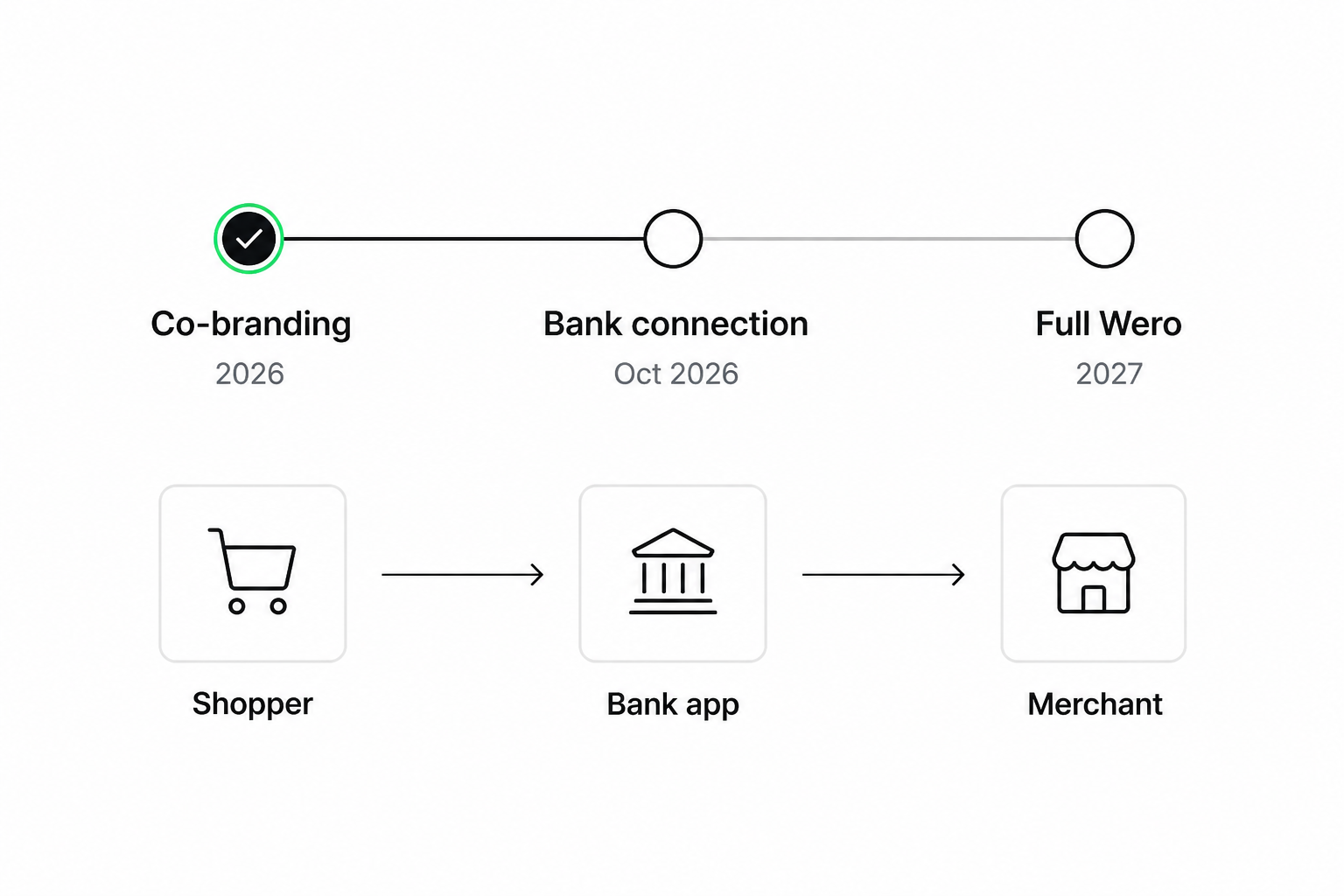
Pay by bank in the Netherlands: Checkout where the customer authorises a payment from their Dutch bank account — historically through iDEAL, increasingly through Wero after migration — without entering card details. Open-banking Pay by Bank uses regulated payment initiation APIs as an alternative integration path for merchants who need bank-rail checkout outside the Wero wallet scheme.
What is changing with iDEAL and Wero?
The Netherlands is replacing its domestic iDEAL scheme with Wero, an account-to-account payment system operated by the European Payments Initiative (EPI). On 16 July 2026, EPI, Dutch banks (including ABN AMRO, ING, and Rabobank), and major PSPs agreed the phase-two roadmap: all Dutch issuing banks connect to Wero by October 2026, merchant technical migration begins in Q4 2026, and the full switch completes by 31 December 2027. Scheme pricing stays broadly aligned with current iDEAL levels until 31 December 2028.
For shoppers, the experience stays familiar — they still pay from their bank app. For your ops team, the back end changes: transaction ID formats differ, settlement reporting shifts, and PSP migration plans vary by acquirer. ABN AMRO’s merchant guidance notes that Wero transaction IDs are not identical to iDEAL IDs, so finance systems must be ready before mixed-rail periods begin.
Co-branding already happened: from March 2026, checkouts display iDEAL | Wero branding. That was the visible phase. The technical phase — rewiring APIs, webhooks, and reconciliation — is what lands in Q4 2026.
Why pay by bank matters for Netherlands checkout economics
iDEAL holds roughly 70% of Dutch online payments — overwhelmingly bank-account checkout, not cards. That concentration means any migration risk hits conversion and reconciliation at scale.
Pay by bank in the Netherlands delivers outcomes B2B teams care about:
- Lower variable cost than card interchange on many account-to-account flows
- Strong payer authentication in the banking app, reducing certain card-style fraud patterns
- Clear payer IBAN data for B2B invoice matching and marketplace seller verification
- No card expiry — recurring and subscription flows avoid involuntary churn from expired cards when bank mandates work
The migration does not remove those economics. Wero remains account-to-account. Open-banking Pay by Bank — payment initiation through a licensed provider’s API rather than the Wero wallet enrolment path — offers a parallel integration for cross-border merchants, platforms aggregating multiple EU markets, or teams that want provider-level control over bank coverage and webhooks. It is not a way to skip Wero if you rely on domestic iDEAL acquirer contracts; it is an architectural choice about which rail and which integration model you standardise on.
Compare rail mechanics in pay by bank explained and pay by bank vs cards at checkout before committing budget.
iDEAL to Wero migration timeline for merchants
Use this phased view when briefing product, finance, and your PSP — dates come from EPI’s July 2026 announcement and ABN AMRO merchant communications.
| Phase | Timing | What changes for you |
|---|---|---|
| Co-branding | Completed Mar 2026 | Checkout shows iDEAL | Wero logo; shopper flow unchanged |
| Bank connection | By Oct 2026 | All Dutch issuing banks on Wero infrastructure |
| Merchant migration | From Q4 2026 | PSP-by-PSP technical cutover; mixed iDEAL/Wero traffic possible |
| Full Wero | By 31 Dec 2027 | iDEAL decommissioned; all payments through Wero |
| Pricing guarantee | Until 31 Dec 2028 | Scheme fees broadly aligned with current iDEAL levels |
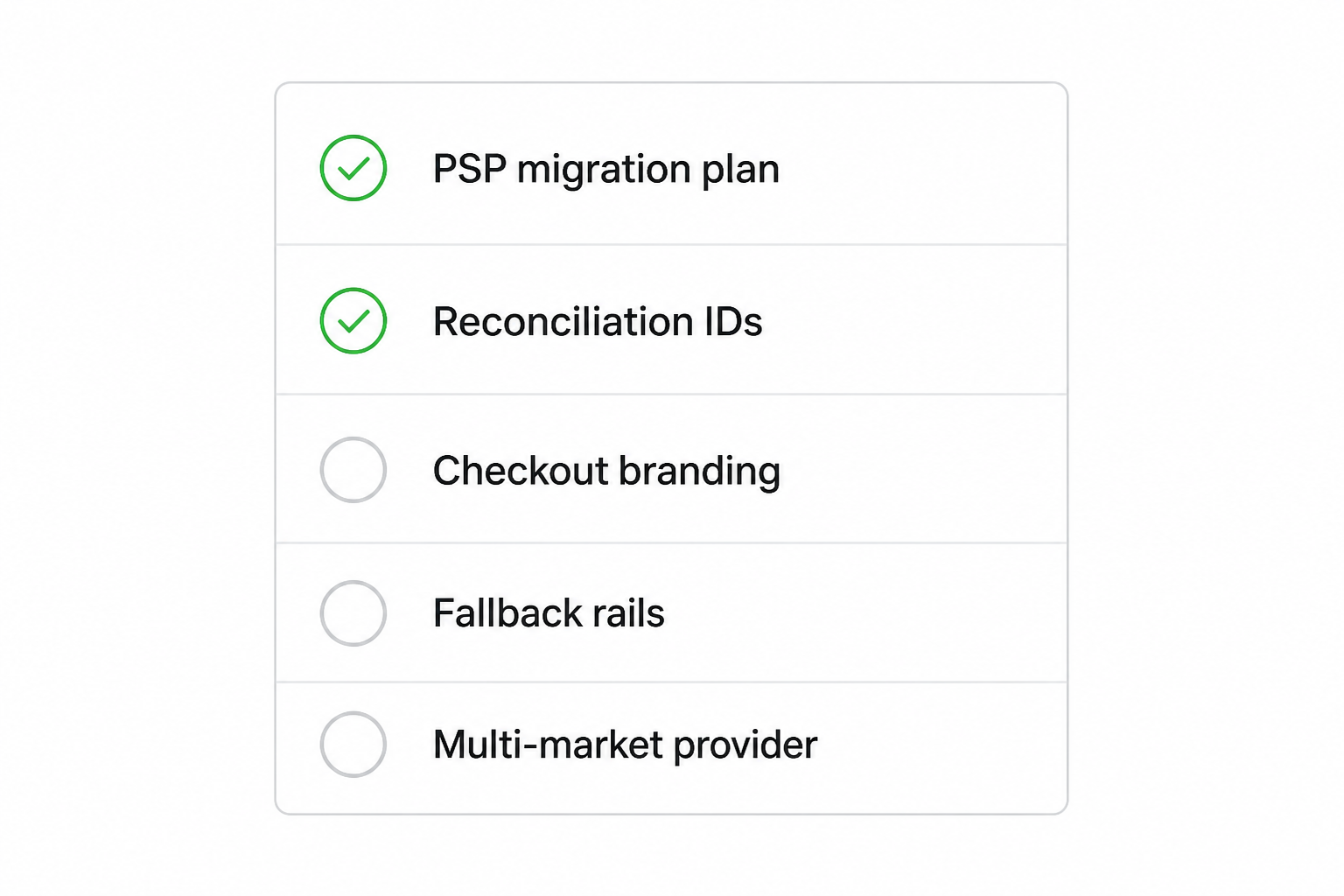
Operational priorities before Q4 2026:
- Confirm your PSP migration plan — Adyen, Mollie, Buckaroo, CM.com, and others are named in EPI’s joint statement; each will publish its own cutover schedule.
- Update reconciliation rules — Map new Wero transaction ID formats; test ERP imports in sandbox.
- Audit checkout copy and logos — Ensure co-branded assets match scheme requirements.
- Plan card and wallet fallback — During mixed-rail periods, failed bank redirects need a backup path to protect conversion.
- Evaluate open-banking Pay by Bank in parallel — If you sell across DE, BE, FR, and NL, a single payment-initiation provider may simplify multi-market checkout versus separate domestic scheme integrations. Use our provider matching form to compare coverage for your bank list and use case.
Pay by Bank vs Wero scheme: which path fits your stack?
Both move money account-to-account. The difference is integration model and commercial relationship, not whether the customer uses a bank app.
Wero (scheme path) — You integrate through an EPI-participating acquirer or PSP. The customer pays via the iDEAL | Wero checkout experience. You follow EPI rulebook updates, migration deadlines, and scheme pricing. Mandatory for merchants on domestic iDEAL contracts through 2027.
Pay by Bank (open-banking path) — You integrate a licensed payment initiation provider that connects to Dutch banks via open banking APIs. The customer selects their bank, authenticates in the app, and approves the payment. You control provider choice, webhook design, and multi-country expansion from one API — useful when the Netherlands is one market in a wider EU rollout.
| Criteria | Wero scheme | Open-banking Pay by Bank |
|---|---|---|
| Best for | NL-primary merchants on iDEAL contracts | Multi-market EU checkout, platforms, cross-border B2B |
| Migration | Mandatory iDEAL→Wero cutover with PSP | Independent of Wero timeline; validate NL bank coverage |
| Customer UX | Familiar iDEAL | Wero checkout | Bank selection → app approval (similar shopper steps) |
| Reconciliation | Scheme transaction IDs via PSP | Provider webhooks + bank references |
| Recurring | Wero roadmap includes subscriptions | VRP/Bank on File where banks support it — see variable recurring payments |
Neither path eliminates the other during migration. Many teams run Wero for NL domestic volume and Pay by Bank for other EU markets until they consolidate providers. Germany-heavy roadmaps should cross-read open banking Germany; UK-EU comparisons sit in open banking UK vs EU.
How to evaluate providers for Netherlands pay by bank
Treat provider slides as hypotheses. Validate against your actual customer bank mix.
Coverage and conversion
- Which Dutch banks cover >80% of your payer base by name — ING, Rabobank, ABN AMRO, bunq, SNS, ASN, Triodos, and neobanks you see in data?
- Mobile deep-link behaviour per bank on iOS and Android
- Measured initiation success rate in production (last 90 days), not sandbox demos
- Desktop redirect fallback when mobile app handoff fails
Migration coexistence
- Does the provider support both Wero-scheme checkout (via PSP partner) and open-banking initiation, or only one?
- Webhook schemas during mixed iDEAL/Wero periods — can finance ingest both ID formats?
- Reference field rules compatible with Dutch invoice numbering and ERP imports
Multi-market fit
If NL is one country among several, ask whether one contract covers open banking for e-commerce across DE, BE, FR, and NL with unified reporting. Fragmented per-country integrations multiply ops load during Wero migration.
Commercial and risk
- Pricing on successful vs failed initiation attempts
- Settlement timing on standard SEPA vs Instant where supported
- EU data residency and subprocessors for enterprise procurement
- Sector acceptance for your vertical — marketplaces, SaaS, travel, insurance
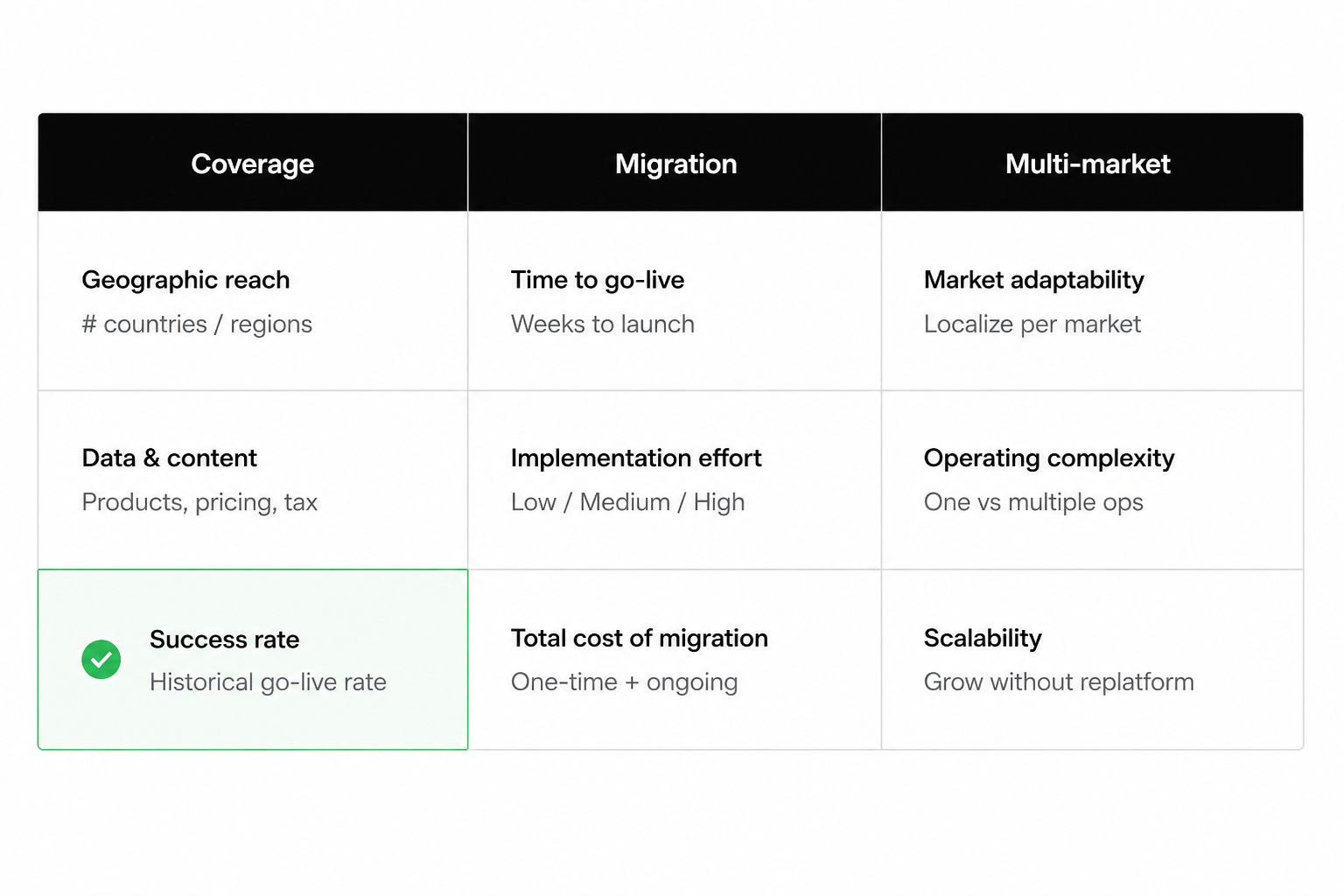
No single provider optimises every Netherlands use case. A marketplace optimising seller payout speed evaluates differently from a SaaS team reducing card churn on annual renewals. For a structured shortlist process, see how to choose an open banking provider in the EU.
What to do before Q4 2026
Product and payments leads should lock a migration owner now — the EPI roadmap is public; PSP silence is not a strategy.
- Request a written migration plan from your acquirer with dates, sandbox access, and rollback steps.
- Run reconciliation dry-runs with sample Wero transaction IDs before live traffic mixes.
- Pilot Pay by Bank on a subset of NL checkout if you need a fallback rail or multi-market API — measure conversion against iDEAL baseline.
- Brief customer support on co-branded checkout and unchanged shopper steps to reduce unnecessary cart abandonment.
- Revisit provider contracts — exit terms matter if migration forces a PSP switch.
The Netherlands is not the only EU market reshaping bank-rail checkout — Wero is live for e-commerce in Germany and Belgium with France expanding — but iDEAL’s scale makes this migration one of the highest-impact checkout projects in Europe for 2026–2027.
Frequently Asked Questions
What is pay by bank in the Netherlands?
Pay by bank in the Netherlands is checkout where the customer authorises a payment directly from their Dutch bank account, typically through iDEAL today and through Wero after the 2026–2027 migration. The customer selects their bank, approves the amount in their banking app, and the merchant receives confirmation without handling card details. Open-banking Pay by Bank uses regulated payment initiation APIs as an alternative integration path alongside the Wero scheme.
When does iDEAL become Wero?
Dutch issuing banks connect to Wero infrastructure by October 2026. Merchant technical migration from iDEAL to Wero begins in Q4 2026 on a PSP-by-PSP schedule. iDEAL decommissions fully by 31 December 2027, according to the European Payments Initiative’s July 2026 roadmap agreed with Dutch banks and payment service providers.
Do Dutch customers need to change how they pay during migration?
The shopper experience stays largely the same — they still pay from their bank app. Checkout branding already shows iDEAL | Wero co-branding from March 2026. Behind the scenes, merchants update integrations, transaction ID handling, and reconciliation as their PSP migrates technical connections to Wero.
Is Pay by Bank the same as Wero?
No. Wero is a European account-to-account payment scheme operated by EPI, replacing iDEAL for merchants on domestic acquirer contracts. Pay by Bank is a merchant integration pattern using licensed payment initiation providers and open banking APIs to connect to banks. Both use bank-app approval, but integration models, contracts, and multi-market expansion paths differ. Many EU businesses evaluate both during the iDEAL transition.
Will Wero cost more than iDEAL?
EPI and participating banks agreed that Wero scheme pricing will remain broadly aligned with current iDEAL levels until 31 December 2028. Your effective cost still depends on PSP markup, successful-payment pricing, and whether you add open-banking Pay by Bank fees on parallel rails.
How do I choose a provider for Netherlands checkout?
List the Dutch banks your customers use, confirm initiation success rates per bank in production, verify reconciliation webhook formats for both iDEAL and Wero transaction IDs during migration, and test mobile checkout on ING, Rabobank, and ABN AMRO accounts. If you sell across multiple EU countries, prioritise providers with unified reporting rather than separate per-country integrations.
Can I use pay by bank for recurring billing in the Netherlands?
Recurring collection via bank rails is expanding — Wero’s roadmap includes subscription features, and open-banking variable recurring payments work where Dutch banks support mandates. Validate recurring capability with your provider against your billing model; one-off checkout coverage does not guarantee repeat-pull support. See open banking subscription billing for ops patterns.
Conclusion
The Netherlands remains a bank-first checkout market, and the iDEAL-to-Wero migration is the defining payments project for merchants selling there through 2027. Shoppers will keep paying from their banking apps; your work sits in PSP migration plans, reconciliation updates, and an honest provider evaluation for pay by bank Netherlands — whether you standardise on Wero through your acquirer, add open-banking Pay by Bank for multi-market control, or run both during transition. Start with your PSP’s written Q4 2026 plan, then validate bank coverage against real customer data — not slide decks.
Related articles
- Open Banking in Spain: Coverage and Provider Fit
Spain combines one of Europe's strongest account-to-account payment cultures with an open banking stack that looks nothing like the UK's single-standard model.…
- Open Banking in France: Coverage and Provider Fit
France sits on many EU payment roadmaps — large banked population, strong mobile banking apps, and heavy B2B invoice volume — yet open banking France on a prov…
- UK Open Banking Adoption: What 1 Billion Payments Means for B2B
If you sell into the UK and still treat pay-by-bank as a pilot, the scale numbers just moved again. On 30 July 2026, Open Banking Limited reported that the UK…