UK Open Banking Regulatory Framework: What Changed in July 2026
UK pay-by-bank and recurring billing roadmaps just got a fixed destination date. On 14 July 2026, HM Treasury opened its Modernising Payment Services Regulation consultation — the clearest plan yet for a permanent UK open banking regulatory framework that replaces the interim Competition and Markets Authority (CMA) order with Financial Conduct Authority (FCA) oversight, statutory access rights for variable recurring payments (VRP), and industry-led commercial schemes such as UKPI. If you sell into the UK and evaluate providers on coverage stability, recurring collection, or scheme economics, this consultation changes what you should ask in RFPs and when you should pilot bank rails versus waiting for Wave 2.
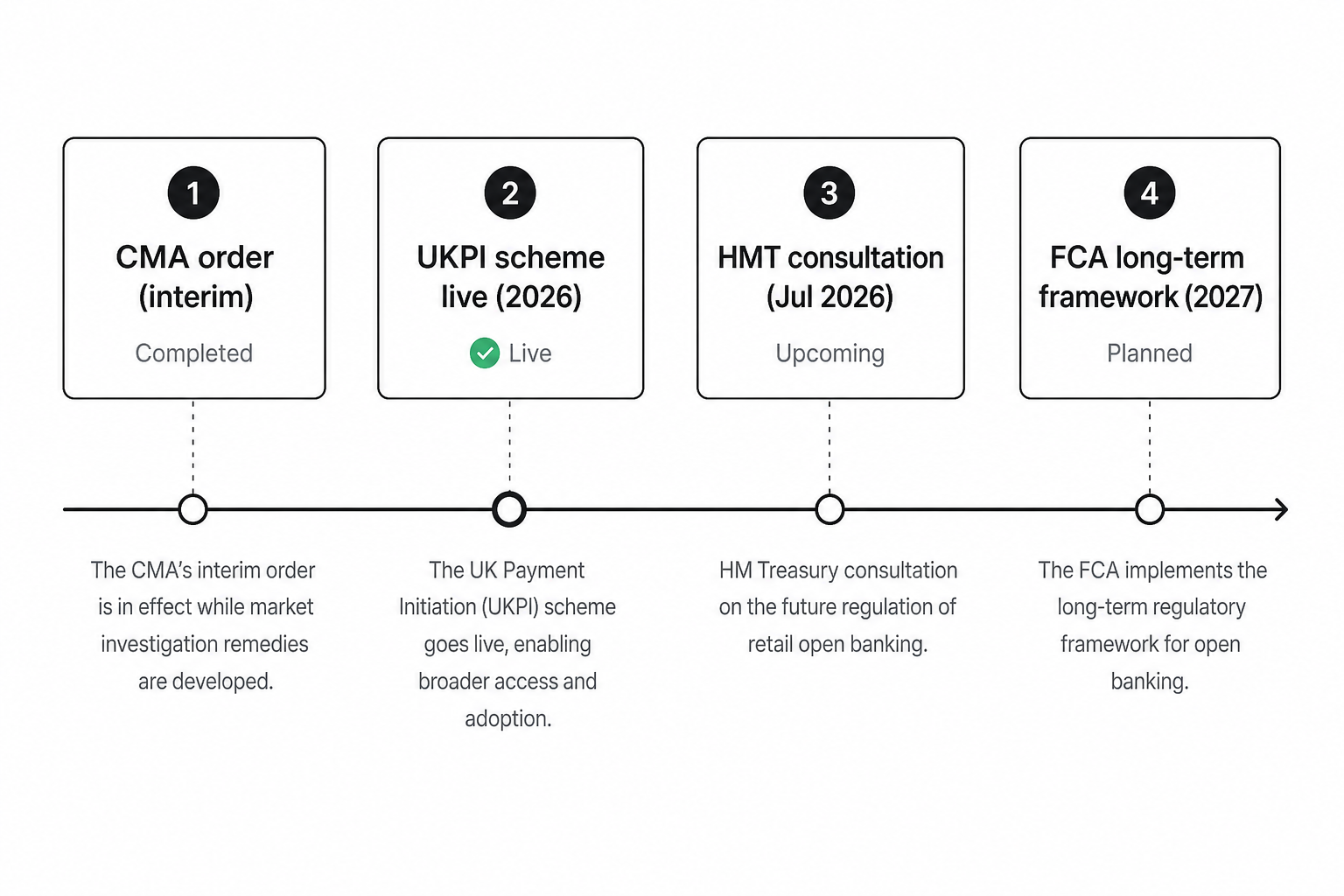
UK open banking regulatory framework: The set of laws, FCA rules, and industry standards that govern how UK banks share account data and enable pay-by-bank and recurring collections — moving from a temporary competition remedy toward permanent FCA supervision under the Data (Use and Access) Act 2025, with commercial schemes like UKPI operating underneath.
What changed for UK open banking in July 2026?
HM Treasury published a consultation on 14 July 2026 that proposes replacing the interim open banking settlement with a permanent, FCA-led framework — including a new statutory right of access for variable recurring payments and a path for Open Banking Limited (OBL) to convene the Future Entity standards body.
The headline shifts for B2B teams:
| Change | What it means for your roadmap |
|---|---|
| Long-term FCA framework | Provider contracts and bank participation rules will eventually sit under one regulator instead of a CMA order extended year by year |
| Statutory VRP access | Recurring pay-by-bank moves from voluntary bank opt-in toward a defined legal right — improving coverage predictability for billing teams |
| Future Entity | Technical and security standards migrate from OBL's interim role to a permanent body the FCA can mandate |
| Commercial scheme pricing | VRP and other new products may carry fair fees; sweeping between a customer's own accounts stays free |
| Q4 2026 statutory instrument | HMT targets laying secondary legislation under the Data (Use and Access) Act by end of 2026, per the Payments Forward Plan |
The consultation closes on 6 October 2026. Final rules will follow FCA engagement papers and policy statements in 2027 — so you are planning against a direction of travel, not tomorrow's API change.
According to Open Banking Limited's 2025 impact data, open banking already supports 351 million payments annually in the UK with 16.5 million active connections — scale that makes permanent governance a commercial priority, not a niche compliance topic.
How does the long-term framework affect your pay-by-bank strategy?
Treat the framework as infrastructure certainty: pay-by-bank remains a government priority, but who sets standards, who pays for access, and which banks must participate will be explicit under FCA rules rather than negotiated ad hoc.
Today, UK open banking rests on a mix of Payment Services Regulations (PSR) access rights and the CMA's retail banking order. That combination worked for initial AIS and PIS adoption but created recurring questions about funding, bank incentives, and who governs new payment types. The July 2026 proposals consolidate toward FCA supervision while keeping foundational access rights in statute.
For product and payments leads, three planning implications stand out:
Coverage stops being a handshake exercise. When the FCA can set interface requirements and consider mandating bank participation in commercial schemes, your provider's UK institution list becomes more durable — especially for recurring flows that depend on bank-side VRP endpoints.
Commercial models get guardrails, not a free-for-all. HMT proposes giving the FCA powers to set pricing guardrails for commercial open banking products. Existing free access for today's core AIS/PIS use cases is protected in principle, but new products — including commercial VRP — are expected to support sustainable fees. That aligns with UKPI's published Wave 1 economics; see open banking pricing models for how scheme fees stack beneath provider quotes.
Smart Data is the wider canvas. Open banking is the first UK smart data scheme. A stable framework is designed to extend toward open finance without you renegotiating bank access from scratch for each new data type.
If you operate in both regions, pair this UK-specific roadmap with open banking UK vs EU — EU teams follow PSD2 and forthcoming PSD3 timelines, not the Data (Use and Access) Act path.
What does statutory VRP access mean for recurring billing?
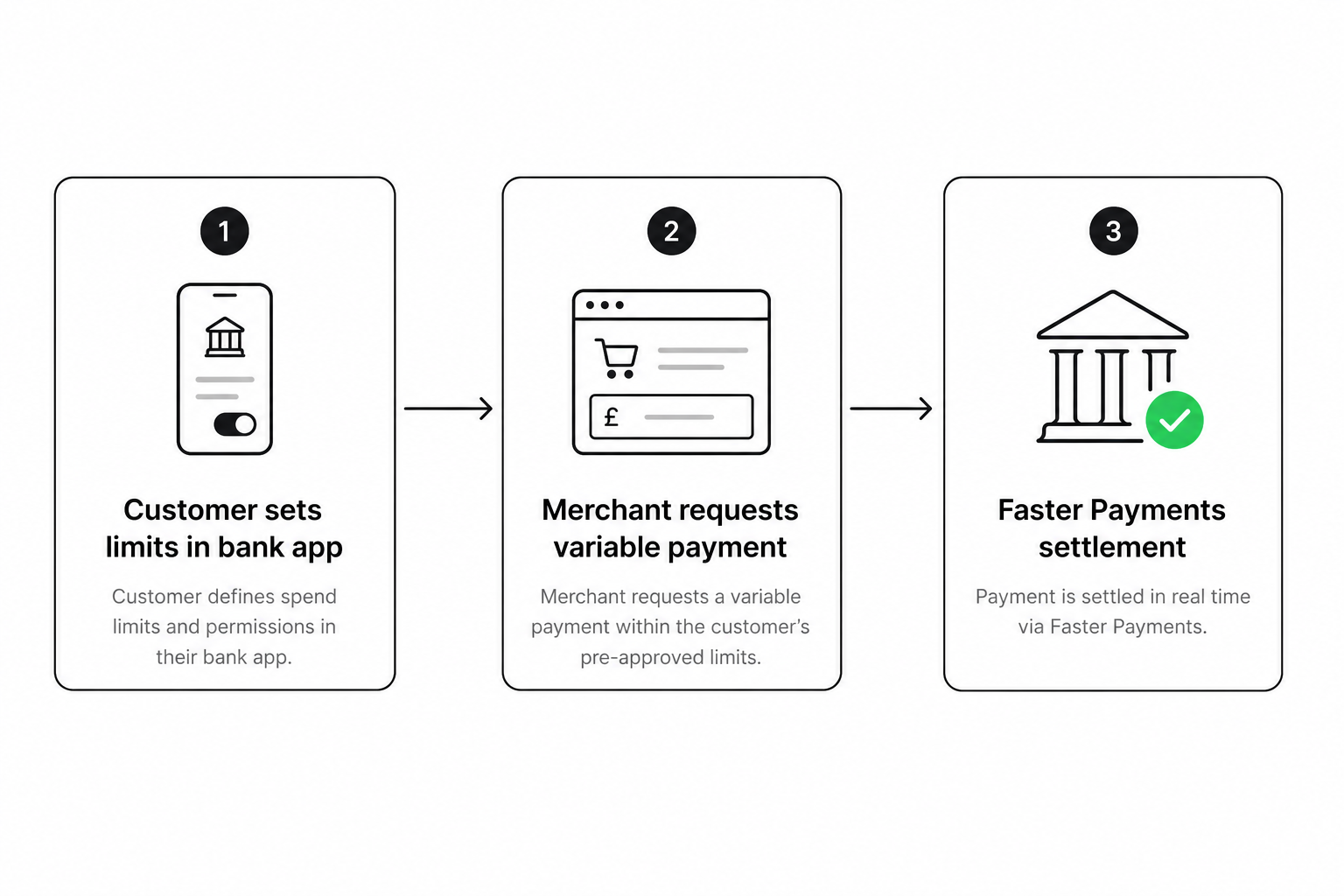
Statutory VRP access means UK payment initiation providers could rely on a defined legal right to pull repeat payments within customer-agreed limits — reducing the fragmented opt-in that has slowed commercial recurring pay-by-bank outside mandated sweeping.
Until now, commercial variable recurring payments (cVRP) under UKPI depended on voluntary industry participation. Banks and payment firms launched the scheme in June 2026 — GoCardless and others now offer live recurring pay by bank for eligible sectors — but coverage gaps still push merchants toward Direct Debit fallback.
HMT's proposal establishes a new right of access specifically for variable recurring payments. In practice:
- Billing teams can plan recurring bank collections with clearer expectations on which account types must support VRP over time
- Finance ops still need Wave 1 sector gates today — utilities, charities, financial services, and parts of the public sector lead; broader e-commerce waits for Wave 2
- Commercial pricing for VRP is explicitly allowed; only sweeping (moving money between a customer's own accounts) remains required free
The consultation asks whether the FCA should be able to mandate ASPSP participation in commercial open banking schemes — a lever that matters if your provider's bank coverage stalls below the ~75% Wave 1 target.
If your use case sits outside Wave 1 sectors, treat statutory access as a 2027 coverage unlock, not a reason to delay sandbox testing with providers that already support UKPI today.
What is the Future Entity and why should providers care?
The Future Entity is the planned permanent standards body for UK open banking — taking on the technical, security, and operational standards work OBL performs today, with FCA powers to require banks and third parties to follow its interfaces.
OBL was selected in July 2026 to convene and coordinate the next phase of Future Entity establishment, following an independent assessment process referenced in HMT's Mansion House package. For B2B buyers evaluating aggregators:
- API stability improves when standards sit with a body designed to outlast the CMA order
- Security and operational requirements may tighten uniformly rather than bank-by-bank interpretation drift
- Funding rules could require certain ASPSPs, PISPs, and AISPs to contribute — costs that may flow into provider pricing over time
When you shortlist open banking providers, add Future Entity readiness questions: which API version they target, how they track OBL and FCA interface consultations, and whether their UK sandbox mirrors upcoming standard changes.
How should B2B teams respond before October 2026?
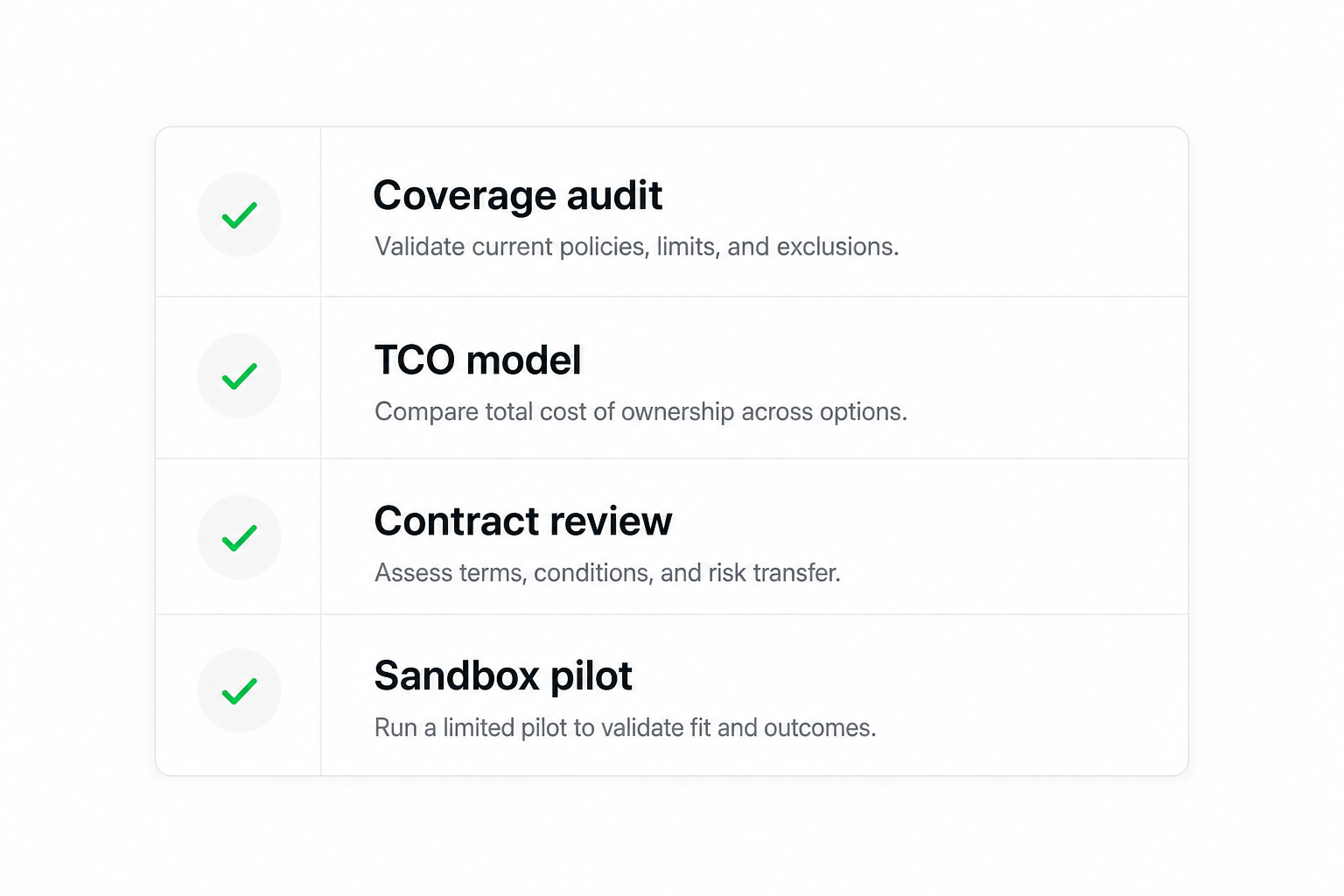
Run three actions now: validate your provider's UKPI and pay-by-bank coverage in sandbox, model recurring economics including scheme fees, and flag regulatory dependency in your 2027 budget — without pausing pilots that already meet Wave 1 rules.
| Action | Owner | Why |
|---|---|---|
| Coverage audit | Engineering | Confirm which of your top customer banks support PIS and cVRP today versus post-statutory timeline |
| Economics refresh | Finance | Rebuild TCO with UKPI scheme fees and potential FCA pricing guardrails on new products |
| Contract review | Legal / procurement | Check renewal clauses for regulatory change, scheme pass-through, and multi-year commits |
| Stakeholder brief | Product | Align UK roadmap with EU workstreams so teams do not merge incompatible timelines |
Organisations with direct policy interest can respond to the consultation at Modernisingpaymentservices@hmtreasury.gov.uk before 6 October 2026. Most merchants will consume outcomes through provider release notes and FCA papers in 2027 rather than filing responses themselves.
Do not defer pay by bank checkout pilots while waiting for final legislation — one-off initiation already works at scale. Do defer company-wide recurring migration until your sector gate, bank coverage, and fallback rails (Direct Debit or cards) are tested against your failure rates.
When you need providers aligned to UK recurring and checkout coverage today, use the provider-matching form to narrow the field before a six-week RFP.
Frequently Asked Questions
What is the UK open banking regulatory framework?
It is the combined set of UK laws, FCA rules, and industry standards that govern secure bank data sharing and pay-by-bank payments. From 2026 onward, HMT is consulting on moving from the interim CMA order model to permanent FCA oversight under the Data (Use and Access) Act 2025, with commercial schemes such as UKPI operating for new payment types like variable recurring payments.
When will the new UK open banking rules take effect?
HM Treasury targets laying a statutory instrument under the Data (Use and Access) Act by Q4 2026, according to the Payments Forward Plan. Detailed FCA interface rules and policy statements are expected through 2027. Existing open banking services continue under current rules during the transition.
Will variable recurring payments stay free for merchants?
Sweeping — automatic transfers between a customer's own accounts — is expected to remain free. Commercial variable recurring payments (paying a business on a repeat schedule) are explicitly allowed to carry fair, sustainable fees under the consultation proposals, consistent with UKPI's published Wave 1 scheme pricing.
What is the Future Entity in UK open banking?
The Future Entity is the planned permanent body that will set technical, security, and operational standards for UK open banking interfaces, succeeding the interim role played by Open Banking Limited. The FCA would be able to require banks and third-party providers to use Future Entity standards and contribute to its funding.
How does the July 2026 consultation affect open banking provider contracts?
Expect clearer long-term regulatory ownership (FCA), potential new pass-through of scheme or access fees for commercial products, and more predictable bank participation rules for VRP. Review multi-year commits, regulatory-change clauses, and UK coverage SLAs before signing extensions through 2027.
What is the difference between UKPI and the new regulatory framework?
UKPI is an industry commercial scheme for variable recurring payments — live in 2026 with sector waves and published fees. The regulatory framework is the government and FCA layer that sets statutory access rights, mandates standards via the Future Entity, and defines pricing guardrails. You need both: the framework enables the scheme; the scheme delivers operational rules and pricing today.
Conclusion
The UK open banking regulatory framework is finally moving from temporary competition remedies toward permanent infrastructure — with statutory VRP access, FCA pricing powers on new commercial products, and OBL convening the Future Entity. For B2B teams, the July 2026 consultation answers the strategic question that blocked budgets: pay-by-bank and recurring bank collection are national priorities with a published legislative path. Execute Wave 1 pilots where your sector qualifies, model scheme economics honestly, and treat 2027 as the horizon for coverage and contract stability — not a reason to stall learning in 2026.
Related articles
- Open Banking in Italy: Coverage and Provider Fit
Italy is where many EU payment roadmaps add Southern Europe — large retail banks, strong mobile banking, and heavy use of bank transfers for B2B invoices — yet…
- European Network for Payments: What ENP Means for Merchants
Cross-border checkout still fragments when every country ships its own bank-app wallet — Spanish shoppers live in Bizum, Nordics in Vipps MobilePay, and Wero k…
- Open Banking in Spain: Coverage and Provider Fit
Spain combines one of Europe's strongest account-to-account payment cultures with an open banking stack that looks nothing like the UK's single-standard model.…