TrueLayer Pay by Bank Funding: What the $27M Round Means for Buyers
If you are shortlisting pay-by-bank providers for EU checkout, the TrueLayer Pay by Bank funding round on 8 October 2026 is a signal about where capital is flowing — not a reason to skip your own sandbox tests. TrueLayer closed $27 million led by Italy's CDP Venture Capital, with existing and new investors participating, to scale its Pay by Bank network and expand its Milan engineering hub. The company states it is live in 22 countries and cites large consumer brands among its merchants. This guide translates the announcement into buyer questions: what the round likely funds, how Italy expansion affects coverage roadmaps, and how to compare TrueLayer against other TSPs after a week that also saw Mollie ship Pay by Bank on GoCardless rails.
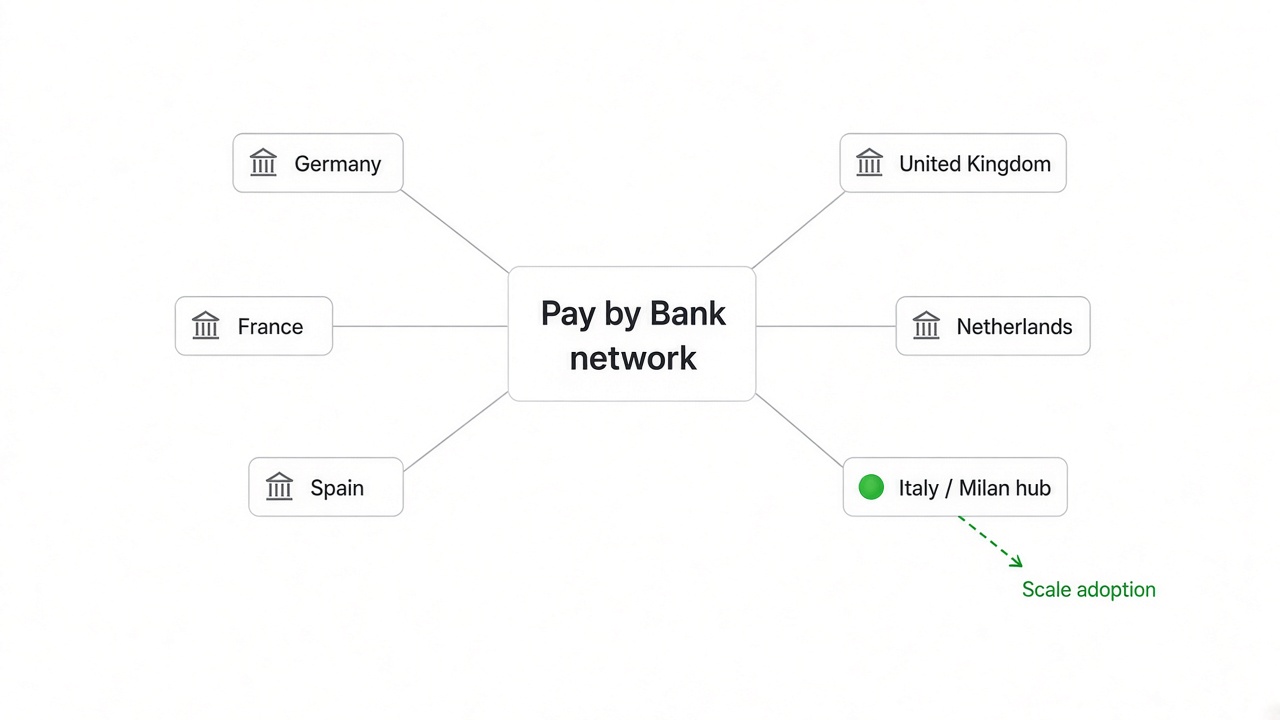
TrueLayer Pay by Bank funding: The October 2026 investment round in which TrueLayer raised $27 million led by CDP Venture Capital to accelerate adoption of its account-to-account Pay by Bank network across Europe and grow its Milan engineering team (CDP Venture Capital).
For Mollie's competing product launch, see Mollie Pay by Bank checkout guide. For scheme-level European consolidation context, read European Network for Payments explained.
What did TrueLayer announce on 8 October 2026?
TrueLayer raised $27 million to scale Pay by Bank across Europe, with CDP Venture Capital leading the round and TrueLayer committing to expand its Milan engineering hub through continued hiring.
According to the CDP Venture Capital announcement and Finextra's report:
- The round was led by CDP Venture Capital (Italy's leading venture capital operator), alongside existing and new investors.
- TrueLayer positions the capital for accelerating adoption of its Pay by Bank network — account-to-account payments as an alternative to card-network checkout.
- The company states it operates in 22 countries and powers payments for 30 million users (Finextra figure), with reference merchants including Ryanair and Just Eat.
- TrueLayer highlights Milan as a core engineering hub; Finextra notes roughly 70 staff in Italy and hiring expected through 2027.
- CEO Francesco Simoneschi frames the round as backing European-built payment infrastructure, echoing wider industry debate about reducing reliance on US card networks.
The announcement is a capital and geography story, not a pricing or feature changelog. Your integration plan should still rest on institution lists, webhook behaviour, and pilot conversion — not press-release scale metrics alone.
Why does TrueLayer funding matter for pay-by-bank merchants?
Fresh growth capital usually precedes faster bank onboarding, checkout product investment, and enterprise sales capacity — which can improve your pay-by-bank option set if you re-run coverage checks, but does not replace contract and sandbox validation.
Merchants care about funding rounds when they affect time-to-coverage and product velocity:
| Buyer concern | How the October 2026 round connects |
|---|---|
| Missing banks in key markets | Scale capital often funds ASPSP connections and SCA UX fixes |
| Checkout drop-off | Product teams can ship hosted pages, mobile app-to-app, and retry logic |
| Recurring and VRP | Pay-by-bank TSPs compete on mandate APIs — investment may accelerate VRP bank lists |
| Enterprise support | Larger sales and solutions teams shorten RFP cycles for multi-country rollouts |
| Strategic stability | State-linked lead investor (CDP) signals long-horizon European rail narrative |
TrueLayer's round lands in a busy pay-by-bank news cycle: Mollie relaunched Pay by Bank on GoCardless technology in the Netherlands (Mollie Pay by Bank), and European scheme groups continue coordinating account-to-account networks (ENP overview). Funding does not mean you should consolidate on one brand — it means competitive pressure on coverage and conversion is rising, which is good for buyers who compare providers on evidence.
Use pay by bank checkout conversion metrics as your north star: approval rate by bank, time-to-webhook, and reconciliation cost per successful payment.
How does Italy expansion change provider evaluation?
TrueLayer's Milan hub expansion matters if Italy is in your rollout map — local engineering often speeds Italian bank connections, SCA flows, and support timezone coverage for Southern Europe.
CDP Venture Capital's release emphasises Italian talent and Milan engineering as strategic, not cosmetic. For payments leads:
- Coverage audit for Italy — Request TrueLayer's current Italian institution list (and SEPA Instant support) before assuming the round fixed gaps you hit in 2024–2025 RFPs.
- Support and incident windows — A larger Milan team can improve CET business-hour response; confirm SLA tiers in your MSA.
- Coexistence with local schemes — Italy still has strong local A2A habits; pay-by-bank TSPs must coexist with wallets and cards, not replace every method on day one.
- Regulatory hosting — Confirm where data is processed and which entity holds your contract if you are a UK vs EU merchant post-Brexit.
If Italy is not on your near-term roadmap, treat Milan expansion as indirect benefit (shared platform improvements) rather than a primary selection driver.
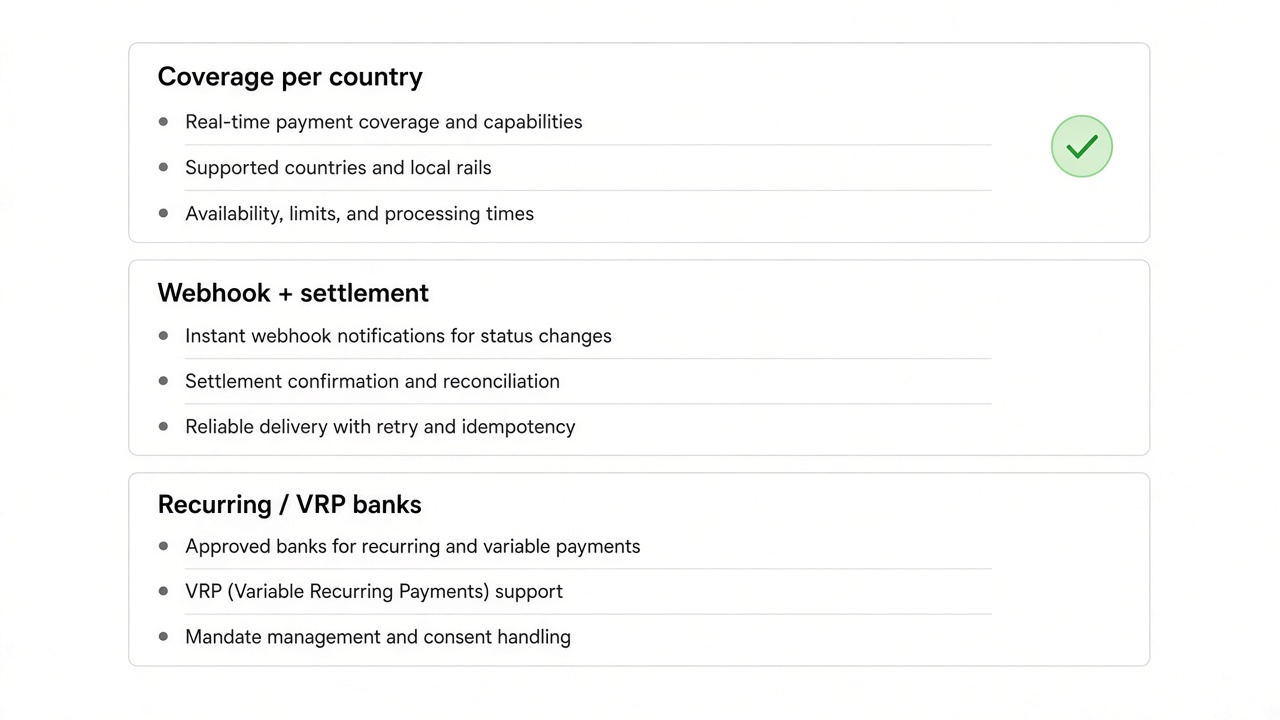
What should finance and product teams do after the TrueLayer round?
Re-open your pay-by-bank shortlist if your last evaluation predates October 2026 — request updated coverage exports, rerun sandbox conversion tests, and compare commercial terms without assuming any single vendor is the default.
Practical workflow for heads of payments and product:
Refresh the data you already have
- Export supported banks for each target country from vendor consoles (TrueLayer publishes a filterable provider table in its developer docs; ask competitors for equivalent exports).
- Match against your top ten banks by payer volume, not marketing totals.
- Re-test mobile checkout — Italy and UK Android/iOS bank-app flows differ materially.
Separate product news from funding news
- Mollie Pay by Bank is a merchant-platform story for NL-first checkout on GoCardless connectivity.
- TrueLayer funding is infrastructure investment for a standalone TSP network.
- You may use both (Mollie for NL acquiring stack, TrueLayer for direct API integration elsewhere) — or neither, if coverage and pricing fail your pilot.
Contract clauses worth revisiting
| Clause | Why it matters post-funding |
|---|---|
| Roadmap commitments | Written bank-add dates for your priority markets |
| Price change notice | Scale rounds sometimes precede commercial model shifts |
| Exit / portability | Mandate and customer consent portability if you switch TSP |
| SLAs on webhooks | Uptime guarantees tied to your checkout SLA |
Our open banking vendor due diligence framework applies the same discipline after any market event — funding, acquisition, or scheme launch.
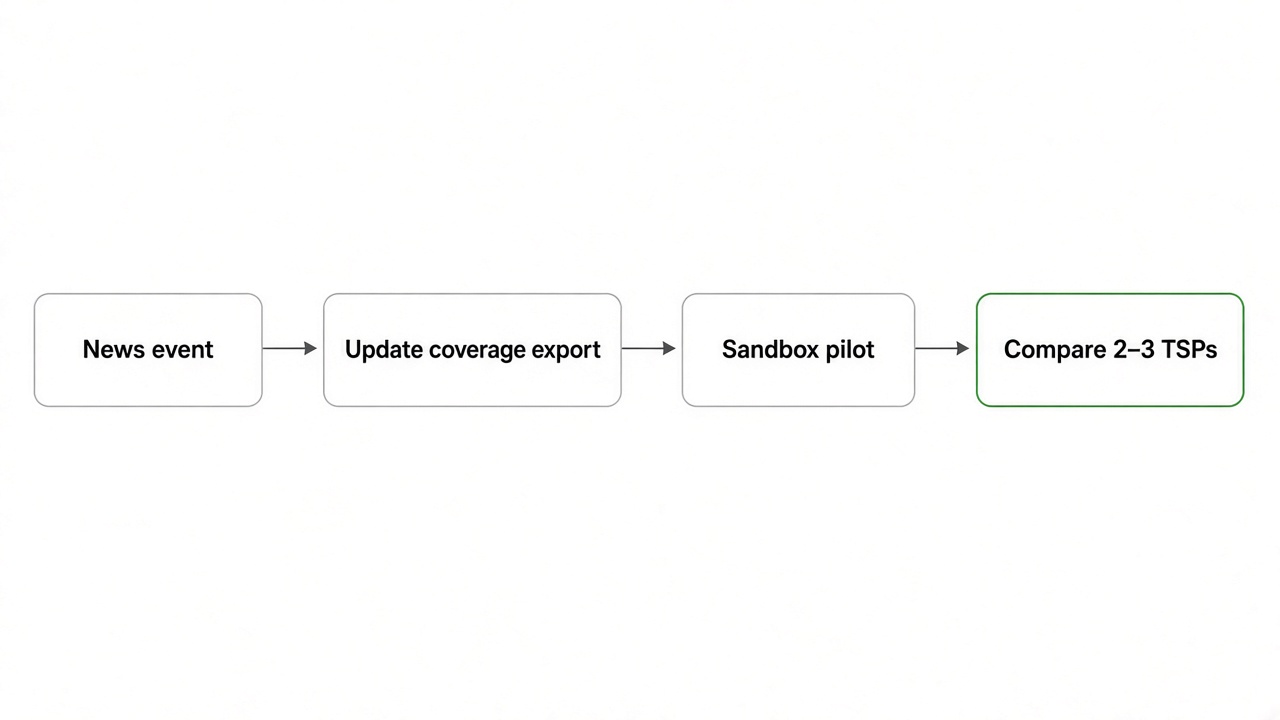
When you need side-by-side fit for your countries and use cases, use the provider-matching form to compare pay-by-bank coverage, recurring support, and checkout models without defaulting to press-release narratives.
How does TrueLayer compare to other pay-by-bank paths in 2026?
TrueLayer is one of several EU/UK TSPs investing in account-to-account checkout — buyers should compare coverage, recurring APIs, and commercial neutrality against Yapily, Token.io, Tink/Visa, Volt, and acquirer-embedded options such as Mollie Pay by Bank.
Neutral comparison dimensions (no vendor ranking):
| Dimension | Question to ask every shortlisted TSP |
|---|---|
| Countries live | Does the list include every market you sell into in 2026–2027? |
| Initiation vs data | Do you need AIS-only, PIS checkout, or both under one contract? |
| Recurring / VRP | Which banks support variable recurring for your billing model? |
| Hosted vs API | Can you ship hosted pages first, then embed later? |
| Neutrality | Does the provider also compete for your card or acquiring wallet? |
| Settlement reporting | Can finance reconcile one file across rails? |
TrueLayer's stated 22-country footprint and large-brand references are useful starting points for enterprise conversations — validate them against your payer bank mix. Developers evaluating APIs should still read open banking API integration for webhook and certificate patterns that funding announcements do not cover.
Teams experimenting with AI-led checkout should note TrueLayer's separate sandbox work on agentic pay-by-bank (agentic payments and open banking) — a different timeline from the October 2026 growth round, but relevant if your roadmap includes delegated payment authorisation.
Frequently Asked Questions
What is TrueLayer Pay by Bank funding?
TrueLayer Pay by Bank funding refers to the October 2026 investment round in which TrueLayer raised $27 million led by CDP Venture Capital to scale its Pay by Bank network across Europe and expand its Milan engineering hub. The round included existing and new investors and was publicly announced on 8 October 2026.
How much did TrueLayer raise in October 2026?
TrueLayer raised $27 million in the October 2026 round led by CDP Venture Capital, according to the company's announcement via CDP Venture Capital and Finextra. The company did not publish a full post-money valuation in the primary release reviewed for this article.
Who led the TrueLayer Pay by Bank investment round?
CDP Venture Capital, Italy's leading venture capital operator and part of the Cassa Depositi e Prestiti group, led the round. Mario Branciforti, Head of the Large Venture fund at CDP Venture Capital, quoted the investment as backing European-owned payment infrastructure, with TrueLayer cited as operating at scale in 22 countries.
Does TrueLayer funding change pay-by-bank pricing for merchants?
A funding round does not automatically change your transaction fees. Merchants should request current commercial terms, volume tiers, and any minimums directly from TrueLayer or their reseller. Use pilot traffic to calculate effective cost per successful payment versus cards and local A2A methods.
Should merchants switch to TrueLayer because of the $27M round?
No single funding event should drive a production switch. Re-run coverage and sandbox conversion tests if your last evaluation is outdated, then compare TrueLayer against other TSPs and embedded acquirer options on institution lists, webhooks, recurring support, and contract portability. Funding may accelerate product improvements — verify them in your own pilot.
How does TrueLayer Pay by Bank funding relate to Mollie Pay by Bank?
They address different buyer paths. Mollie Pay by Bank is a merchant checkout product built on GoCardless connectivity inside Mollie's platform, initially NL-focused. TrueLayer's funding backs its standalone Pay by Bank network and TSP APIs across multiple countries. Merchants may use one, both, or alternative providers depending on geography and integration model.
What countries does TrueLayer cite for Pay by Bank today?
The October 2026 announcements state TrueLayer is live in 22 countries. Exact country lists and per-bank product support (payments, data, VRP) change over time — export the current institution table from TrueLayer or your integration partner rather than relying on headline country counts alone.
Closing notes
The TrueLayer Pay by Bank funding round is a bet on European account-to-account infrastructure at a moment when acquirers, schemes, and TSPs are all accelerating bank-rail checkout. For buyers, the actionable takeaway is procedural: refresh coverage data, rerun sandbox pilots, and compare contracts on reconciliation and recurring support — then choose the stack that meets your conversion and ops targets. Press releases describe scale; your ledger and checkout analytics prove fit.
Related articles
- Mollie Pay by Bank: What the 2026 Relaunch Means for Checkout Teams
Payments and product teams watching the Mollie–GoCardless combination now have a concrete checkout reference: Mollie Pay by Bank relaunched on 2 October 2026 a…
- Pay by Bank Payment Links: Hosted Checkout Without Card Fields
Payments teams add pay by bank payment links when customers are not inside a logged-in checkout — dunning emails, SMS reminders, in-store QR codes, or partner…
- Pay by Bank Chargebacks: What Merchants Need to Know
High-dispute checkout categories — digital goods, subscriptions, travel, and cross-border e-commerce — bleed margin on card chargeback fees, representment ops,…