Mollie GoCardless Acquisition: What Pay by Bank Buyers Should Do Now
If you run recurring billing, invoice collection, or checkout on GoCardless or Mollie, the Mollie GoCardless acquisition completed on 1 September 2026 changes the shortlist math for every EU payments lead evaluating pay-by-bank rails. Mollie now owns GoCardless outright — cards, local methods, accounts, and Pay by Bank under one group serving more than 350,000 businesses across 30+ markets. Existing contracts stay in place for now, but procurement teams should read the integration signals, review exit clauses, and decide whether a comparison exercise makes sense before phased product changes land. This guide explains what the combination means operationally, what stays stable in the near term, and how to evaluate alternatives without overreacting to press-release language.
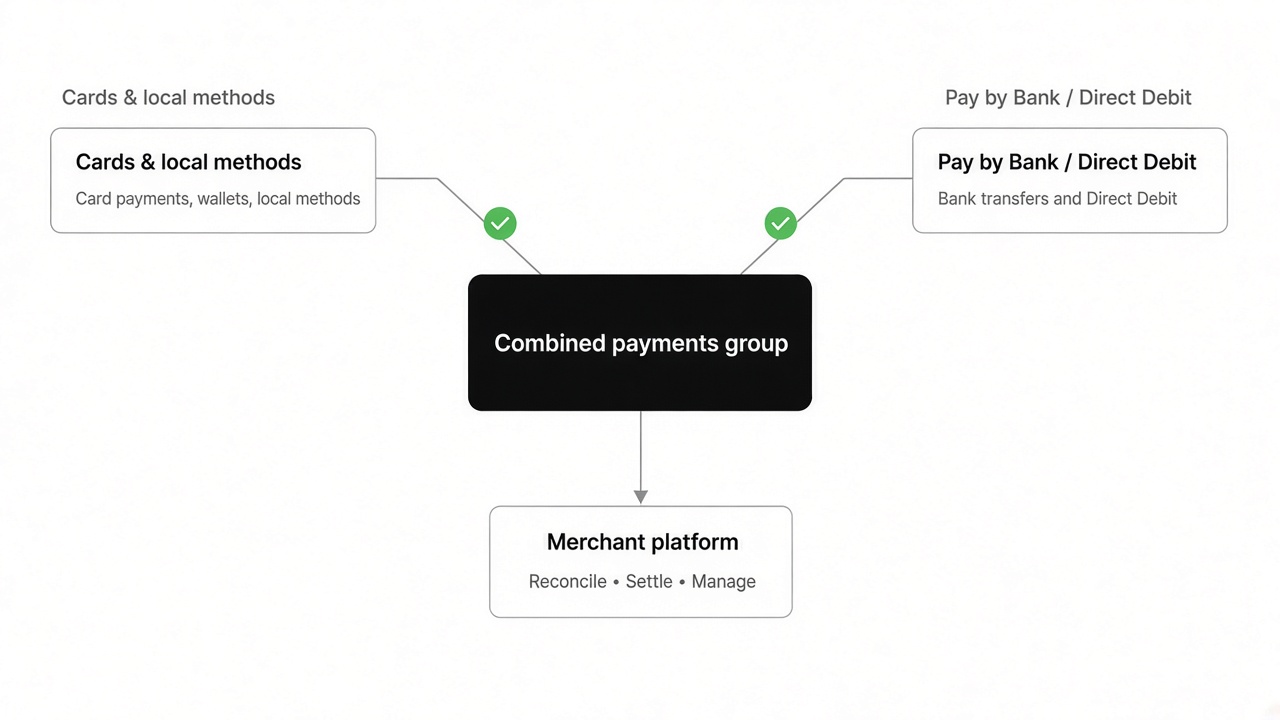
Mollie GoCardless acquisition: On 1 September 2026, Mollie completed its acquisition of GoCardless, combining Mollie's card and local payment methods with GoCardless's bank-payment network across 38 countries. GoCardless continues as "GoCardless, a Mollie company." Existing customer contracts and contacts remain unchanged in the immediate term; integration is phased.
What did Mollie and GoCardless announce?
Mollie acquired GoCardless to offer cards, bank payments, accounts, and business financing from one partner — addressing the fragmentation where merchants split cards, Direct Debit, and bank pay across separate providers.
According to the GoCardless announcement, the combined group:
- Serves 350,000+ businesses across 30+ markets
- Unites Mollie's card and local payment methods with GoCardless Pay by Bank across 38 countries
- Keeps GoCardless operating under co-founder Hiroki Takeuchi as "GoCardless, a Mollie company"
- Promises no immediate changes to existing services, contacts, or contracts for either company's customers
- Plans phased integration led by customer needs rather than a forced overnight migration
Both companies reported improving financial health before the deal — Mollie achieved EBITDA profitability in 2024 with €147 million net revenue in 2025; GoCardless recorded its first EBITDA-positive quarter in summer 2025. That matters for buyers because integration timelines are less likely to be driven by distress fire-sales and more by deliberate product roadmap choices.
Why does the Mollie GoCardless acquisition matter for pay-by-bank buyers?
Provider consolidation reduces integration sprawl but increases concentration risk — one contract may soon cover both card checkout and bank collection, which simplifies ops until that single vendor misses a mandatory bank or changes commercial terms.
Three buyer outcomes to track:
Fewer vendors to reconcile
Merchants who ran Mollie for cards and GoCardless for Direct Debit or Pay by Bank can eventually consolidate reporting, support queues, and reconciliation feeds. Finance teams spend less time matching settlement files from two PSPs — if the integration delivers unified dashboards as promised.
Stronger multi-rail positioning
The announcement explicitly frames a comprehensive payment suite: Mollie's local methods plus GoCardless bank rails. That mirrors the multi-rail pattern in pay by bank vs cards at checkout — bank initiation where economics fit, cards where habit or coverage gaps demand fallback. A combined vendor can pitch that story without a second integration.
Shortlist compression — and lock-in risk
When the largest independent pay-by-bank specialist joins a broader PSP, alternative comparison sets shrink. Teams mid-RFP may fold Mollie and GoCardless into one evaluation row instead of two. That saves procurement time but weakens negotiation leverage unless you keep a credible second finalist — the pattern described in open banking multiple providers.
What stays the same for existing GoCardless and Mollie customers?
Near-term contract continuity is explicit — neither company's announcement promises forced migrations, pricing changes, or contact swaps on day one.
What you can rely on today:
- Existing GoCardless Direct Debit and Pay by Bank flows continue under current terms
- Mollie card and local-method checkouts operate independently until integration milestones ship
- Support contacts and account managers remain as assigned
- API integrations and webhooks should behave as before — monitor release notes rather than assuming silent changes
What you should not assume:
- Long-term pricing parity between legacy Mollie and GoCardless commercial models
- Permanent API separation — unified billing or merged developer portals may arrive in 2027+
- Unchanged roadmap priority for niche features (UKPI cVRP, variable recurring caps, country-specific schemes) that matter to your sector
Document your current SLAs, webhook schemas, and bank coverage lists now. If integration later merges platforms, those baselines become evidence in renewal negotiations.
How should teams evaluate providers after this consolidation?
Run a structured comparison only if your renewal window, coverage gap, or multi-vendor strategy demands it — not because headlines require action.
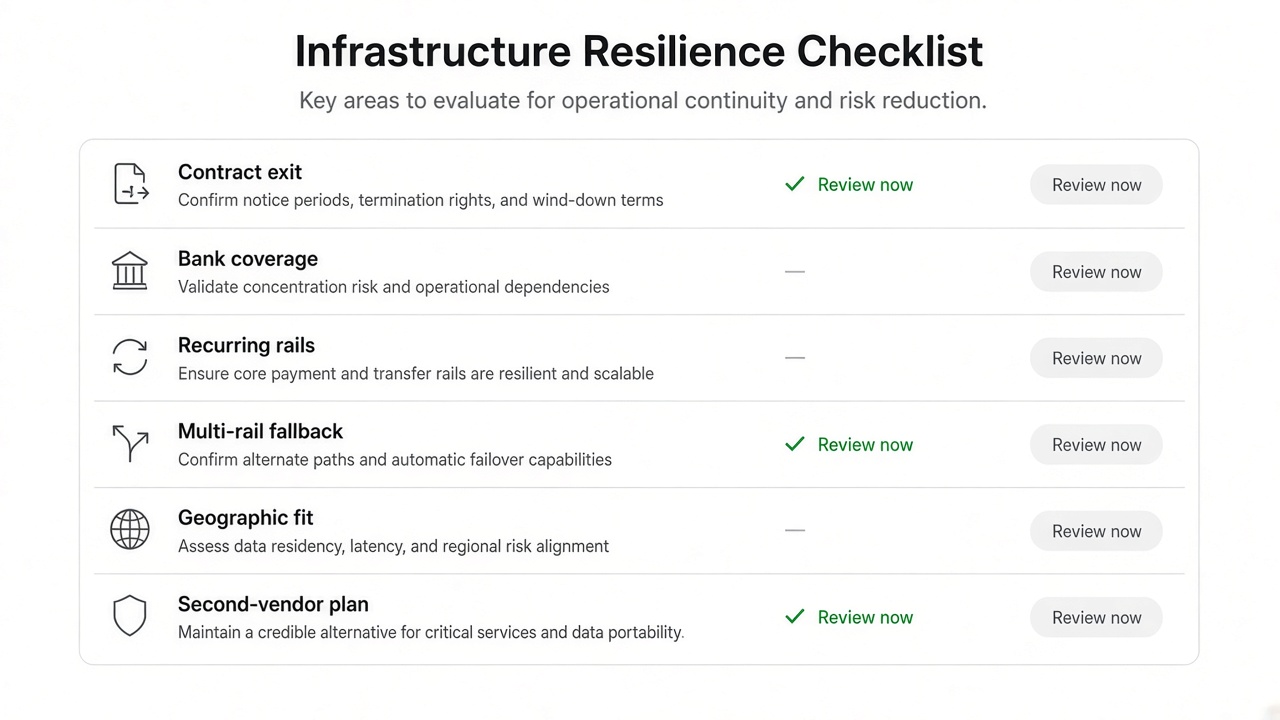
Use the framework from open banking provider comparison with acquisition-specific additions:
| Evaluation dimension | Question for your team |
|---|---|
| Contract exit | Can you terminate or renegotiate if unified pricing rises? |
| Bank coverage | Does the combined entity cover your mandatory institutions in sandbox? |
| Recurring rails | Do you need UKPI cVRP, SEPA DD, variable recurring, or one-off PIS — and which brand ships each? |
| Multi-rail fallback | Will cards and bank pay share one reconciliation ID after integration? |
| Geographic fit | Mollie is EEA-rooted; GoCardless adds US, Canada, Australia, NZ — does your roadmap match? |
| Second-vendor plan | If you stay, do you keep an alternative warm for failover? |
When to compare alternatives now
- Renewal within six months — use the acquisition as a negotiation anchor; request written integration timeline and pricing hold clauses
- Coverage gaps on institutions your customers actually use — consolidation does not add banks automatically
- Single-vendor concentration above your risk threshold — especially if GoCardless was your only bank-payment specialist
- Competing RFP already in flight — clarify whether Mollie and GoCardless bid as one entity or separate lines
When waiting is reasonable
- Stable volumes, satisfied bank coverage, and renewal more than a year out
- You already run open banking multiple providers with GoCardless as secondary failover only
- Your use case is narrow (e.g. UK Direct Debit only) and the announcement confirms no immediate product changes
If you need a structured shortlist, use the provider-matching form to compare independent alternatives against your mandatory banks and recurring use cases.
What does the deal mean for recurring and Pay by Bank roadmaps?
Bank-payment innovation stays strategically important to the group — GoCardless brand independence and Pay by Bank emphasis in the announcement signal bank rails are not being subsumed into card-only economics.
Implications for recurring billing teams:
- Direct Debit and Pay by Bank remain core GoCardless products; expect continued investment in recurring pay by bank and UK commercial VRP where scheme rules allow
- Mollie merchants may gain faster access to GoCardless bank rails without a separate integration — watch for phased API unification announcements
- Variable billing (utilities, telcos, SaaS) benefits if one partner offers both card retry logic and bank mandate collection — compare against your current open banking subscription billing stack
Trade-off: a combined roadmap optimises for the median merchant — platforms with unusual mandate rules, multi-entity settlement, or hybrid build vs buy open banking architectures should confirm niche features stay staffed post-acquisition.
How does consolidation affect the wider open banking provider market?
The Mollie GoCardless acquisition is the largest pay-by-bank consolidation of 2026 so far — it does not eliminate independent alternatives, but it raises the bar for what "full-stack" means in RFPs.
Competitive dynamics to watch:
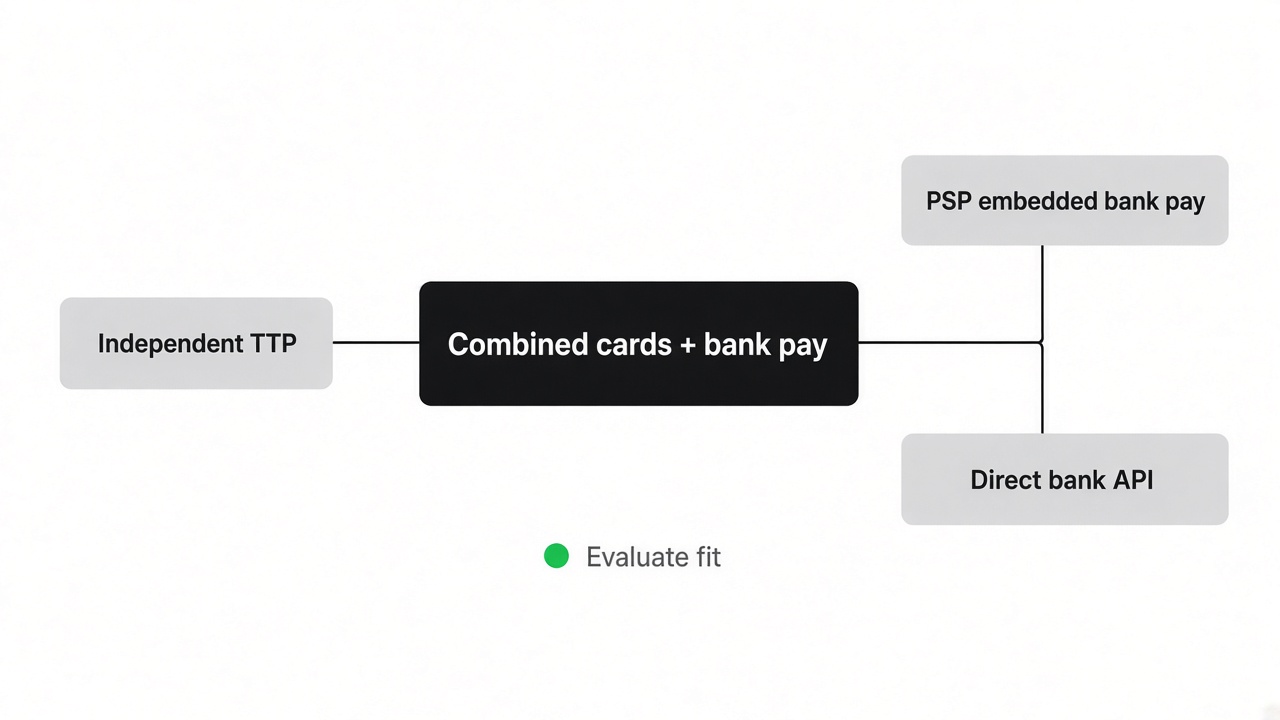
- Independent TTPs (TrueLayer, Yapily, Token.io, Tink/Visa, and others) may emphasise neutrality — no competing card acquiring — in enterprise deals where merchants fear lock-in
- PSPs with embedded bank pay will cite the Mollie–GoCardless template when pitching unified checkout
- Procurement teams should update vendor registers: Mollie and GoCardless are one group for conflict-of-interest and concentration reporting
If your evaluation criteria include "provider independence from card acquiring," note the combined entity now spans both. That is not inherently negative — many merchants want one throat to choke — but it changes how you weight neutrality in open banking RFP checklists.
Frequently Asked Questions
What is the Mollie GoCardless acquisition?
On 1 September 2026, Mollie completed its acquisition of GoCardless. The combined group offers cards, local payment methods, Pay by Bank, Direct Debit, accounts, and business financing to more than 350,000 businesses across 30+ markets. GoCardless continues as "GoCardless, a Mollie company" under co-founder Hiroki Takeuchi.
Will my GoCardless contract change immediately?
No — the announcement states there are no immediate changes to services, contacts, or contracts for existing GoCardless or Mollie customers. Integration will be phased. You should still review exit clauses and document current SLAs before your next renewal because unified pricing and platforms may arrive later.
Should I switch away from GoCardless because of the acquisition?
Not automatically. Switch only if you have coverage gaps, renewal leverage, concentration risk beyond your policy, or a finalist list that already included stronger fits for your countries and use cases. Stable customers with good bank coverage and distant renewals can monitor integration releases while keeping a comparison framework ready.
How does the deal affect pay by bank vs cards strategy?
The combined entity is explicitly multi-rail — Mollie's cards and local methods plus GoCardless bank payments. Merchants can simplify toward one vendor for both rails, but should validate that bank initiation success rates and card economics still meet targets in each market. Keep fallback rails until sandbox and pilot data confirm parity.
Does Mollie owning GoCardless reduce open banking provider choice?
It consolidates two major names into one group, which narrows shortlists that treated them as separate alternatives. Independent TTPs and other PSPs remain. Teams worried about lock-in should maintain a secondary provider or document exit terms — especially for recurring mandates that are painful to migrate.
How do I compare providers after this merger?
Use standard criteria — bank coverage, recurring rail support, webhooks, pricing shape, geographic fit — plus acquisition-specific checks: written integration timeline, pricing hold through renewal, unified reconciliation roadmap, and whether your mandatory banks stay supported. Run sandbox tests on your top institutions before signing any amended group contract.
Is GoCardless still a separate brand?
Yes. GoCardless continues to operate as "GoCardless, a Mollie company." Product and support brands may stay distinct during phased integration even as ownership and long-term roadmap sit with Mollie's leadership under CEO Koen Köppen.
What should your team do this week?
Treat the Mollie GoCardless acquisition as a trigger to document baselines, not panic-switch.
- Export your current bank coverage list and last quarter's initiation success rates by institution
- Pull contract exit and auto-renewal dates for GoCardless and Mollie agreements
- Ask account managers for a written integration timeline and any planned API or pricing changes
- If renewal is within six months, refresh a three-vendor comparison using how to choose an open banking provider in the EU criteria
- If you rely on GoCardless as your only bank-payment path, assess whether a secondary integration is worth the ops cost before integration narrows your leverage
The deal validates that pay by bank is strategic infrastructure — not a side product — for major European PSPs. Your job is to ensure the combined entity still matches your banks, billing model, and risk policy before you consolidate further.
Related articles
- Open Banking Credit Bureau Data: How Lenders Merge Both
Open banking credit bureau planning is what credit, BNPL, and embedded-finance teams do when a bureau score alone misses cash-flow reality — but raw transactio…
- Open Banking Vendor Due Diligence: What to Verify Before You Sign
Open banking vendor due diligence is the evidence pass you run after a promising demo and before legal sends the MSA. It turns marketing claims into test resul…
- Open Banking Multiple Providers: Dual-TSP Setup Guide
Open banking multiple providers is how platform and payments teams keep checkout and verification live when one aggregator hits a bank outage, a country gap, o…